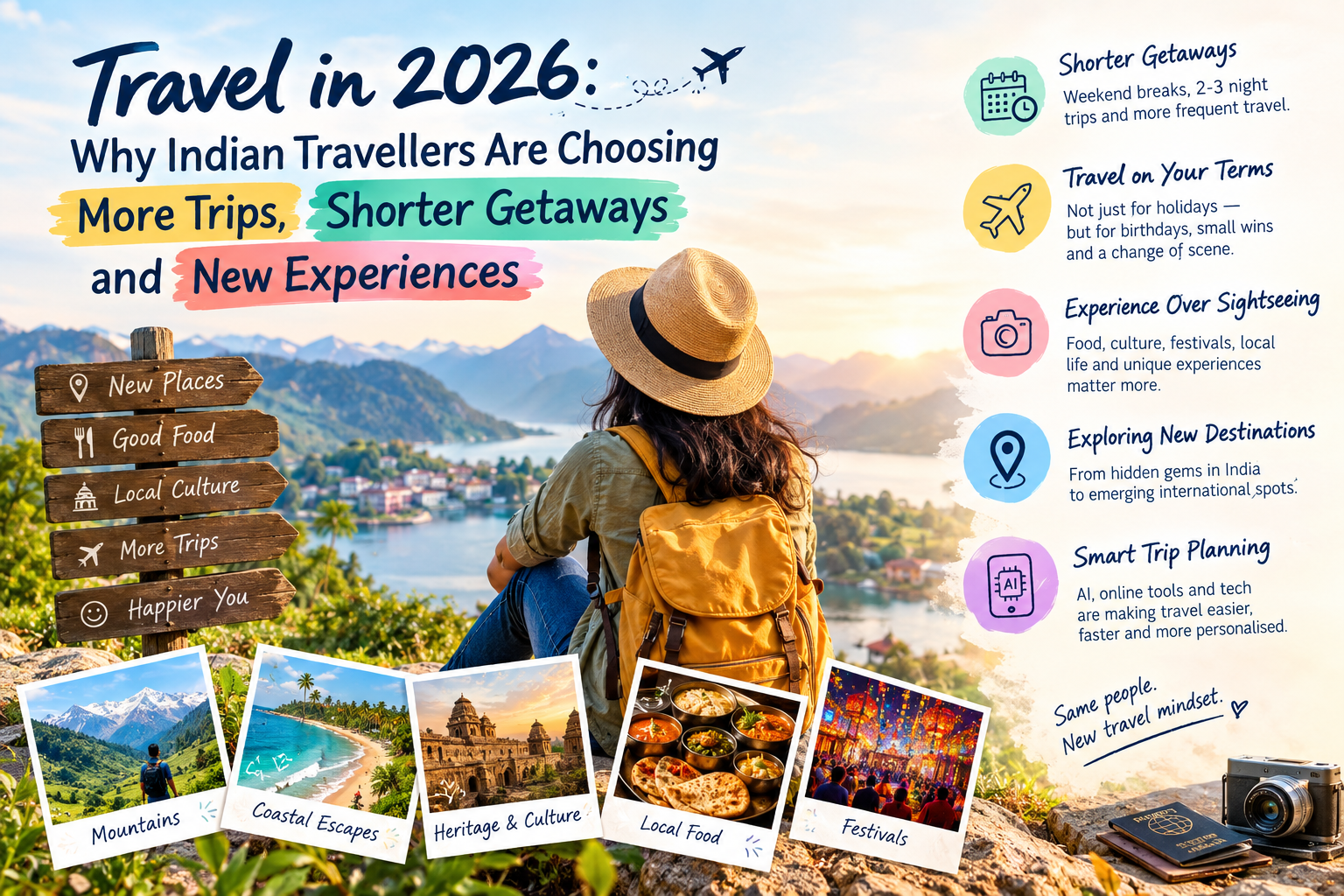
Travel in 2026: Why Indian Travellers Are Choosing More Trips, Shorter Getaways and New Experiences
Travel in India is changing faster than ever. The traditional idea of saving for one big annual holiday is gradually giving way to shorter, more frequent and experience-driven trips. From weekend escapes and unexplored destinations to easier international travel and smarter trip planning, 2026 is turning out to be an interesting year for travellers.
For Indian travellers, the biggest question is no longer simply “Where should I go?” It is increasingly becoming “What kind of experience do I want?”
The Rise of Short, Frequent Trips
One of the strongest travel trends emerging in 2026 is the shift towards multiple short holidays rather than one long annual vacation.
A recent Airbnb report found that 7 in 10 Indian Gen Z travellers prefer three short trips over one long annual holiday. The same research found that 95% want their trips to feel personal and unique rather than conventional or heavily pre-planned.
This explains the growing popularity of weekend destinations, road trips and four-day international breaks. Travellers are increasingly looking for experiences that fit around work, rather than planning their entire year around one holiday.
India’s Domestic Travel Boom
India itself is becoming an increasingly attractive playground for travellers.
According to the Ministry of Tourism, India recorded approximately 4.29 billion domestic tourist visits in 2025, a remarkable 45.6% increase compared with 2024. Indian national departures also crossed 32.8 million, showing that Indians are travelling extensively both within the country and abroad.
The interesting part is that travellers are looking beyond traditional favourites such as Goa, Manali and Jaipur. Northeast India, lesser-known Himalayan destinations, coastal regions and rural experiences are gaining attention.
This creates an opportunity for travellers who want something different: less crowded places, authentic local experiences and better value for money.
International Travel Is Becoming More Accessible — But Rules Are Changing
International travel is also evolving rapidly. Easier e-visas, visa-on-arrival facilities and improved digital immigration systems are reducing some of the traditional barriers faced by first-time international travellers.
However, travellers need to check entry requirements carefully because visa policies can change quickly.
For example, Thailand recently reduced its visa-free stay for Indian tourists from 60 days to 30 days, effective August 31, 2026. Indians can still visit Thailand without obtaining a visa in advance for tourism, but longer stays require the appropriate visa arrangement.
The lesson is simple: never rely on old travel information when planning an international trip. Always verify visa and entry requirements shortly before departure.
Airports Are Making Travel More Convenient
India’s expanding aviation network is another important development.
In September 2026, Ahmedabad became the third Indian city to introduce a hub-and-spoke international flight model, following Amritsar and Varanasi. Under this system, eligible passengers can complete baggage, customs and immigration procedures at their originating airport, potentially making international connections smoother.
Better connectivity could make international travel more accessible to people living outside India’s traditional metro hubs.
The New Traveller Wants Experiences, Not Just Sightseeing
Perhaps the biggest change is psychological.
Today’s traveller increasingly wants food experiences, local culture, wellness, nature, adventure, photography opportunities and authentic interactions rather than simply ticking famous landmarks off a list.
This is particularly visible among younger travellers. Airbnb’s 2026 research found that 87% of Indian Gen Z respondents say the way they travel reflects who they are, while three out of four say their travel companions matter more than the destination itself.
In other words, travel is becoming part of personal identity.
What Should Travellers Expect Next?
The future of Indian travel looks increasingly shorter, smarter, more personalised and experience-focused.
For travellers, this means there are more choices than ever before. You don’t necessarily need a two-week holiday to create memorable experiences. A three-day road trip, a four-day international escape or an unexplored domestic destination can be equally rewarding.
The smartest approach in 2026 is to remain flexible, compare travel costs, check current visa rules and weather conditions, and explore beyond the obvious destinations.
Travel is no longer just about reaching a place. It is about creating an experience worth remembering.